
What Is Educational Event Management?
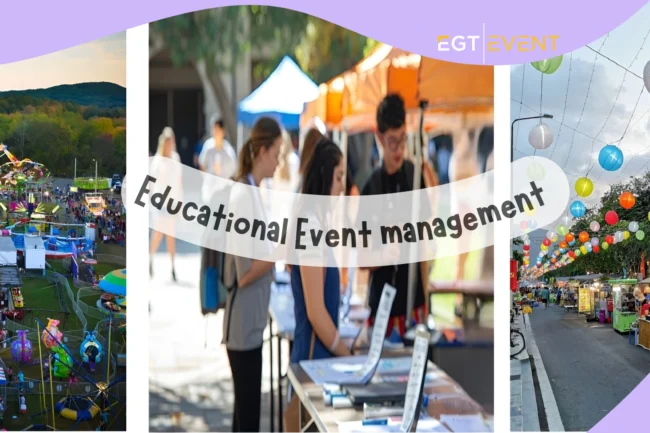
In the modern universe of schools, learning does not stop with the textbook or the auditorium. Leading educational institutions today know that organized, focused meetings leave a lasting mark. And this is exactly when educational event management transitions from a mere administrative task into a valued strategic function. It is an organised work in the field of education to enable the attainment of educational, effectively designed activities that help in academic, developmental, social or administrative goals. A methodical way to approach events that use both pedagogy and logistics, ensuring every program from a school science fair to a college debate competition, from a university festival to an international academic conference can offer identifiable learning opportunities.
The importance of Educational Event Management for Institutions
In this age of waning student participation and rising digital distractions, the significance of an educational event management system cannot be overemphasized. Professional academic event planning, first of all, brings back the timely topic and meaningfulness of learning. When an institution makes a point of dedicating time, dollars, and expertise to do an event well, it sends an important message to students: you care about their development. This creates emotional buy in, a higher propensity to participate, a sense of excitement, and a connection to the organization. Second, successful institutional events serve as a brand and reputation accelerator. A correctly handled festival, contest or meeting makes a college or university more famous. That is certainly attractive to the press, potential donors, industry partners, and prospective students. Thirdly, organizing an event allows students to practice real-world skills like leadership, teamwork, crisis management, public speaking, and negotiation, which are competencies that can only be developed outside of an examination.
Impact of Managing Educational Events on Students
Professional management of educational events has the greatest, multidimensional, measurable direct impact on students. Research has shown that attending well-organized academic events substantially increases motivation, self-esteem and sense of belonging in students. Conventional classes keep the bright students bored and the struggler students lost. This monotony is avoided through careful planning and execution of academic events that offer multiple entry points to engage. A student who would falter at a written examination could win a debate, a science exhibition or a cultural performance, given the right place through a proper coordinate of the academic event. This strengthens the validation of the wide array of skills and decreases dropout. Moreover, well-planned institutional meetings form lasting memories and pledges for social purpose. A student working in person with fellow students in college festivals, a university hackathon builds professional and personal networks that increase in value as their lives progress, even well beyond graduation. Psychologically, efficiently executed events alleviate isolation, particularly at a large university scale, and add doses of pleasure, challenge and success into the academic calendar.
How to Educate Events for School, College and University Students?
Particles of interest differ depending on the academic level, and institutions that plan well have very good sense about the events they hold.
School Students (Age 6 and Over)
For students between school going ages (generally age 6 to 17) you would want certain events that foresee the integration of essential skills with aspects of enjoyment and inquisitiveness. Such events will be science exhibitions with are working models made by students, spelling bees and mathematics olympiads which appreciate academic rigor, cultural fests that showcase diversity through music, dance and painting, career awareness days which involve professionals in various fields interacting with young minds and literary festivals with storytelling and creative writing workshops. This requires more formal academic event planning again with open houses that act as parent-teacher interactive meets rather than the dreaded ‘report card’ session for schools.
College students (Age 18 to 20)
By college age (18–20), events should emphasize both skill-building and exposure to members of the profession. Hackathons and coding challenges work like magic for tech colleges. Business plan competitions, mock stock market challenges, marketing strategy battles and case study competitions are good for arts and commerce colleges. Colleges can conduct leadership summits, public speaking workshops, resume-building programs, and planning dinners with the alumni network of that particular campus as well. They fosters practical lessons in resilience, professionalism and competition.
University Students (20 Years & Up)
Academic event coordination is at its most refined level for university students (ages 20 and above). Events at university level include academic conferences where students present original research, international symposiums with guest speakers from international institutions, job fairs and placement drives with many recruiters at one place, legal mock trials for law students, medical camps and health awareness drives for medical students, large-scale university festivals integrating sporting, cultural, and technical competitions, and postgraduate research symposiums where master’s and doctoral candidates defend their theses. They all require approaches to planning that are specific to the university context.
What Are the Types of Places That Can Be Chosen for Educational Events?
Gathering the right audience requires an appropriate setting—the physical environment in which learning occurs has a direct effect on learning outcomes, attention spans, and the overall experience, making venue selection a critical component of successful academic event planning. Indoor venues for institutional activities should comprise: 1. auditoriums (for lectures, cultural events, and large assemblies); 2. smart classrooms and seminar halls (for workshops, panel discussions, and institutional group activities); 3. indoor sports complexes (for physical education events, team-building exercises, and inter-collegiate competitions) and 4. libraries or resource centers (for quiet events like book readings, research poster presentations, and study marathons)
Outdoor places provide a less but equally important set of benefits. University lawns and open amphitheaters provide a space for flexibility to be used for festivals, concerts, open-air theater, and other large events. The botanical gardens or even nature reserves close by provide a good setting for biology field studies, environmental awareness events or even photography competitions. Off-campus venues are strong for real-world exposure events. These can be corporate offices to visit industry, networking, mentorship; museums & art galleries for history, archaeology, & fine arts researchers; innovation centers & startup incubators for events and pitch competitions; or public squares or community centers for social awareness campaigns, blood donation drives, civic engagement. The professional academic event coordinators assess the programming goals of an event and tailor the venue atmosphere, size, accessibility and safety features accordingly.
Educational event management in practice
The professionals involved in managing educational events understand that there is a well-defined, repeatable lifecycle. The process starts by determining needs and setting goals. The institution or event manager should ask: What skill or knowledge gap are we addressing? Who is the target audience? What is the approved budget? What are the success metrics? Phase two consists of planning and design, from detailed scheduling, task force for transportation, content, finance, marketing, security and hospitality, speakers, judges, or performers and programming event flow.
The third stage is the allocation of resources and promotion. It entails reserving venues, organizing transportation, food preparation, technology (sound systems, projectors, live streaming tools, etc.), printing of schedules and badges, signage and so forth. You are promoted via institutional websites, event landing pages, social media, student and parent newsletters, and posters on campus. Phase 4: ExecutionThe fourth stage is where the event literally takes place. It calls for on-ground coordination, crowd management, immediate troubleshooting, strict time adherence and smooth communication between all teams. The last step is to evaluate your work and collect feedback. Surveys are sent to all attendees and speakers and volunteers; pictures and video are stored away professionally; accounts are wrapped up; more detail comes into an after-action report that can help create better academic experiences next time around.
When is it Ideal to Hold Educational Events (Kab Kab Events Karne Chahiye)
Timing is critically important but is one of the most neglected aspects of academic event planning. Must always respect the academic calendar. Final exams, entrance exams, and major religious and national holidays can never coincide with major events. For schools, ideally any large events like annual days, science fairs or sports meets can be held during the mid-semester break or right after the end of term exams, in these windows: Oct–Dec, Jan–Feb, avoiding peak exam months (Mar, Sept).
For colleges and universities, professional academic planning recommends windows: September to October, immediately after the first round of internal examinations, and February to April, before final examinations begin. It is mandatory for these freshers’ parties and orientation activities to take place within the first four weeks from the start of the academic session. You can say about different placement drives or about placement fairs scheduled in the particular month of either August or September for the 1st semester (where ever the 1st semester placements are conducted) and January to February for the 2nd semester (where ever the 2nd semester placements are conducted) as well or even add any attachment or else you better put it as a Reminder for few students where ever the case arises. Such cultural and technical festivals are best done during long weekends or in the month of November when the weather is pleasant at most places. Avoid planning any major educational event on the day before the national examinations, during midterm exam periods or on public transport holidays when buses are less often available.
Events To Be Conducted Which Ones (Kon Kon Se Events)
Based on Educational Level, Institutional Goals, & Principles of Professional Educational Event Management, here is a straight-forward and tactical list of Events all institutions should consider.
These events can be annual sports day, inter-house debate competitions, science and art exhibitions, parent-teacher engagement fairs, talent shows, literary festivals, math olympiads, spelling bees, environmental awareness campaigns and health check-up camps.
You are trained till Oct. But to implement this for colleges: 1. Department specific quiz competitions 2. Startup pitch days 3. Mental health awareness weeks 4. Blood donation camps 5. Alumni meetups 6. Industry guest lecture series 7. Coding and business simulation games 8. Public speaking championships
Example – For Universities: international cultural festivals, research paper presentation events, industry-academia conclaves, 48 hour innovation marathons, career networking galas, legal camps, medical screening camps, postgraduate research symposiums, and international faculty exchange events.
Leadership retreats, community service projects and first-aid training workshops at all school levels are also conducted, along with a series of interdisciplinary seminars. This list is then adapted to the specific demographic, infrastructure and budget of the institution through professional academic event coordinators.
Educational event management plays an important role in the growth of students.
When done by a professional academic event planner, the growth that you experience is full spectrum, quantifiable, and permanent. AcademicsThe problem with students who have attended events is that they have to apply their theoretical knowledge practically, which corresponds to a deeper understanding of the concept. For example, a student who constructs a functional hydraulic bridge for a science fair will keep physics principles in mind for much longer than a student who merely reads a textbook. At the professional level, well-formalised academic events create a portfolio of testable skills. An example of a marketing event organized in college can provide evidence of leadership, budgeting, vendor negotiation, time management, crisis response, and teamwork to potential employers. And these are the very skills that recruiters point out as absent in fresh graduates.
Academic events socially disband cliques, hierarchies, and prejudices. However, through regular routine and structured practice, a shy student who was forced to speak during debate gains confidence. Conflict Resolution, Cultural Sensitivity and Working in Diversity Team under Pressure as a University Student Volunteering as a Coordinator for Massive Festival. It is an emotion that, after doing well in an event, alleviates anxiety, cultivates resilience and builds memories of positive experiences with education. In addition, attending career events where industry professionals are present gives you access to internships, mentorships, letters of recommendation, and even direct job offers. Simply put, it is educational event management that converts passive learners to active doers, and that conversion is what education is all about.
Manage Educational Events Just like they are High Impact Events
Professional Standards for Educational Event Management
So how do we make sure that we create real growth, not just activity, in our educational event management? Always have a clear, written learning objective for each event before any planning happens. Second, establish a diversified planning committee of students and teachers who share responsibility for relevance and buy-in. And third, you need to leverage modern day digital tools for online registration, collection of real time feedback, use live polling during the session and have instant post-event analytics. Fourth, adopt a relentlessly safe and inclusive mindset in everything you do. Make venues wheelchair accessible, content culturally, religiously, and linguistically accessible to all, on standby for ER services especially large scale events. Fifth, document everything professionally. Good photos, good edited video highlights and written testimonials will help market future events and attract sponsors. Finally, hold an obligatory review within a week of the event, when memories are fresh, to note lessons learned, mistakes made, and recommendations for the future cycle of academic event planning.
Mistakes to Avoid While Managing Educational Event
There are some big mistakes that ruin even the best efforts with professional academic event coordination and there is no reason to fall into these traps. Do not overstuff the schedule. A full event between 8 AM and 8 PM without enough breaks will leave students fatigued, have them retaining less of what they learn, and further, make students more prone to accidents. Do not ignore the budget. Exhausting funds mid-execution causes confusion, tarnishes institutional reputation and leaves suppliers at the mercy of unpaid work. Do not neglect post-event communication. Writing thank-you cards to speakers, sponsors, judges, and volunteers fosters long-lasting relationships and is more likely to bring them back and sprinkle your event with plenty of warm and good feelings. Never skip the feedback loop. Events that are planned without the involvement of the audience are events that are designed to fail. Above all else, never treat a big budget as a guarantee of success. The most memorable events are the ones that have real content, an organized movement by a passionate person, and good ole fashioned human connection, not just flowers and celebrity guests.
Tomorrow: Event Management in Higher Education
In that sense, the future of educational event management is hybridised, underpinned by data, and moderate in terms of sustainability. In-person events will always have an important place in human connection and experiential learning, but digital integration is table stakes. The expectations also include live streaming for distance and remote students along with event-specific mobile apps for schedules, networking, AI-enabled sentiment analysis of feedback forms, and automated certificate generation. Sustainability is also gaining importance at a rapid pace. However, with the advent of environmentally conscious students and faculty members, there are now additional requests for eco-friendly events with little plastic waste, digital brochures instead of printed brochures, reusable name badges, carbon-neutral venue choices and plant-based catering options. This discipline is no longer an afterthought or a job given to the youngest person on staff. To be relevant, competitive, and genuinely effective in the future, institutions must master it.
Contact egtevent to organize your University Festival, Graduation ceremonies or events in Istanbul Turkey.
Contact details: +90 535 248 17 79
[email protected]
https://egtevent.com/